|
Pantanal Tours The Pantanal affords the richest wildlife viewing in the Americas. It is easier to see animal species in the Brazil Pantanal than it is in the Amazon because:
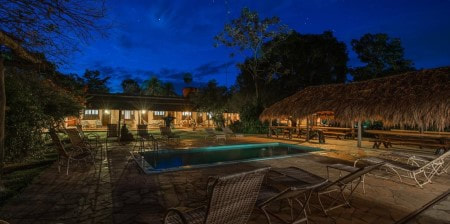
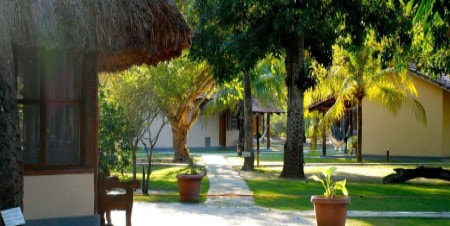
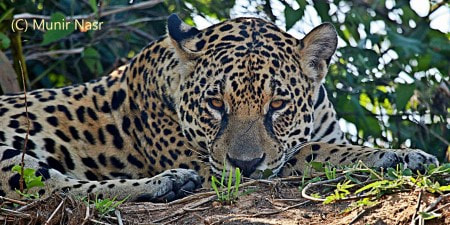
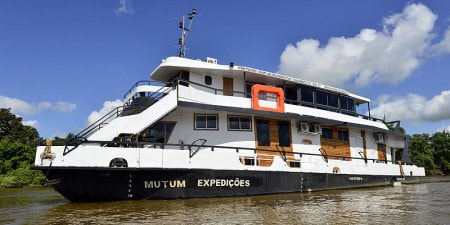
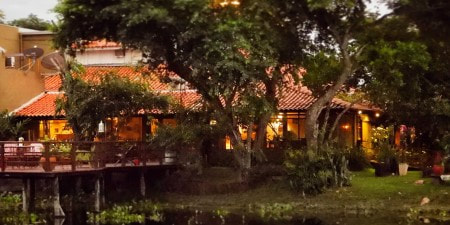
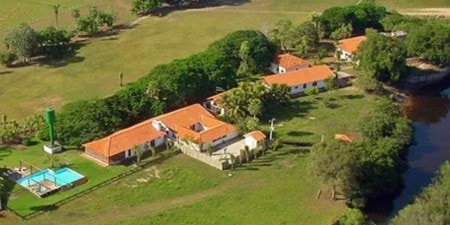
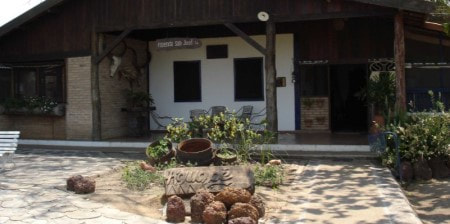
We use lodging that affords the best viewing opportunities for a Pantanal tour. We offer tours in both the southern and northern Pantanal. The north is accessed via Cuiaba and the south via Campo Grande. We also offer several lodging options for people who really want to see jaguars on a jaguar tour. In the south, we can easily combine Bonito with the Pantanal on a tour to increase the variety of activities and incredible sites to see. 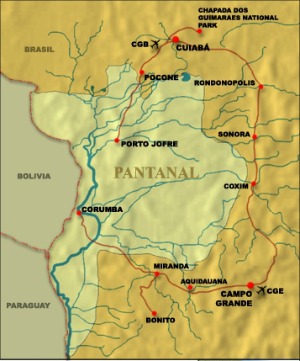
|
|
Northern Pantanal Options
(via Cuiaba) 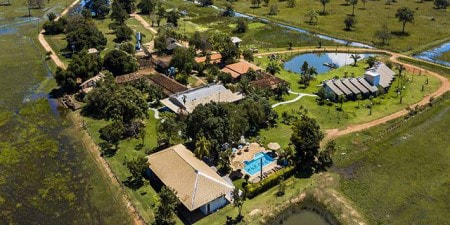
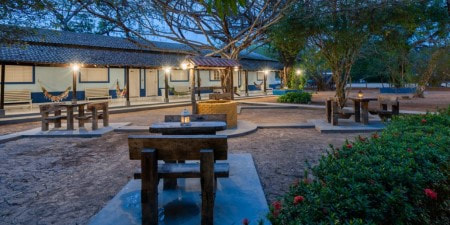
|
Southern Pantanal Options
(via Campo Grande) 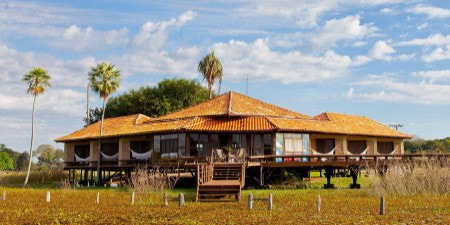
|
Mato Grosso is the third largest state in Brazil with more than 900,000 km2 and within area are found three distinct eco-systems.
Cuiabá, the capital of the state, is located at the geodesic center of South America. Strategically positioned at the convergence of the three ecosystems. This makes it the best starting point for Pantanal tour expeditions to any of these fantastic and fascinating worlds. Approximately 700 species of birds; 100 species of mammals; 80 species of reptiles; 240 of fish as well as a great number of invertebrates, constitute the richest variety of fauna to be found in the Americas.
- the Savannah or Scrubland, dominates the whole of the Brazilian Central Plateau and adjacent areas
- the Amazon Forest, situated in the north of the state, where one of the largest indigenous reserves of the country is located
- the Matogrossense Pantanal wetland, a fascinating ecological sanctuary, in the southwest of the state
Cuiabá, the capital of the state, is located at the geodesic center of South America. Strategically positioned at the convergence of the three ecosystems. This makes it the best starting point for Pantanal tour expeditions to any of these fantastic and fascinating worlds. Approximately 700 species of birds; 100 species of mammals; 80 species of reptiles; 240 of fish as well as a great number of invertebrates, constitute the richest variety of fauna to be found in the Americas.
On the edge of the Brazil Central Plateau stands the mystical Chapada dos Guimarães, a region of peculiar topography, at an altitude of 650 meters, overlooking the Pantanal. Rock formations of various geological era and fossils of marine deposits from the Devonian Period, as well as reptiles from the Mesozoic Period, illustrate the various geological phases this region has been through. The region was used by the indians during their wanderings through South America, leaving various marks as well as the remains found in the archeological sites. One of the most majestic emergent rock formations in the world is today the source of various rivers which, descending in waterfalls, end up supplying Pantanal water.
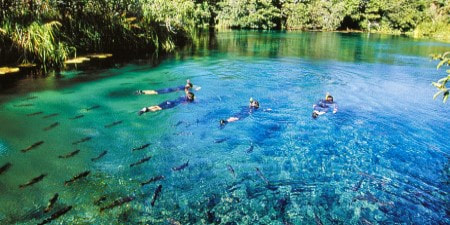
The southern Pantanal Brazil is normally accessed via Campo Grande. This is the area to go to if you want to combine with a visit to Bonito for some great snorkeling and other activities.
|
THE PANTANAL IN ITS DIFFERENT CYCLES.
The Pantanal biome has distinct phases as it passes through its cycles. Looking at the movement of the water, variations in access possibilities and the migratory routes of the animals, we can predict : THE FLOOD (JAN/FEB/MAR).
|
"The wildlife was great. I've never seen so many animals in such a small place with such a variety (except maybe the zoo)" Michael Hachigian "The tour guide planned a great itinerary. I especially liked that we stayed in two locations. We saw tons of animals and birds, ate great food and enjoyed the scenery." Eleanor Jones "A few months have gone by since that most memorable trip to Brasil. The accommodations were great and the guide (Jean - Haitian) really did everything we wanted him to do. My son and I were probably not your typical tourists as we had no problem with the hikes or the hours. We saw both kinds of anteaters (and not the one feeding from the handheld bottle although it was truly cool having that long tongue slurp at your fingers and hand), Marmoset and Howler monkeys, Capybaras and Caiman, Lizards and even a Tortoise, with at least 40 different kinds of birds (Eagles, Buzzards, Herons, Storks, Ibis, Parakeets, Toucans, Macaws, Secretary, etc., etc., etc.). One neat event was coming across a newly hatched brood of baby caiman making their little grunting noises - I was definitely looking around for mama - if I had been inclined I could have easily caught one of the 28 or so that were milling about. In the Chapada we took a long hike and swam in a couple of large pools with waterfalls - way cool - well not really, since the water was only a few degrees colder that the ambient air temperature but it still was refreshing!" - Duane It was just absolutely fabulous. Munir was wonderful and went way above and beyond. The highlight might have even been when he took us for ice cream and served the kids a plate with all Brazilian flavors, but Pablo would say the piranha fishing. . The lodge was perfect, the kids met and played with kids from all over the world, the food was fabulous and we really saw an amazing amount of animals. It really was wonderful." Alison "We had a fantastic trip to Brazil and I am most grateful to you for all the arrangements and planning. Everything worked very well, and we were very happy with planning as well as with the standards of hotels and of local guides. We particularly enjoyed our week in Pantanal with Munir who proved to be a very friendly companion and extremely knowledgeable nature guide. Please convey to him our regards and sincere gratitude. The only criticism that I might have refers to the Lencois Marenhenses part of the trip: in my experience the package was a bit too short, and it would be nice to spend another day at the Preguicas River Lodge, which is a beautiful place on the bank of the river, having an extra day exploring the dunes. This, of course is a minor downside, and did not affect on the entire trip, which as a whole was extremely enjoyable. Thanks again for everything." Gidon "We had a brilliant time thanks! Absolutely loved the Pantanal - saw lots of wildlife. Managed to see 8 jaguar, but plenty of other animals too & lots of birds. Our guide was very knowledgeable & all I all it was a fabulous trip.....wish we had had more time in Brazil … want to go to the Amazon now...maybe next year!!! Thanks for all your help. We normally travel quite independently, but we definitely wouldn't have got the best from the Pantanal without this trip. " Karen |
