Tambopata Research Center
|
|
The Tambopata Research Center has been enlarged to be a 24 bedroom lodge built with the object of lodging tourists and researchers alike and of protecting the adjacent macaw clay lick. Tambopata Research Center is an excellent place for in depth explorations of Amazonian nature and wildlife. There are no humans nearby, so sightings of monkeys, macaws and other large species become more frequent. Jaguars are sometimes seen near the river bank! (35% of visitor's saw one in 2017)
|
Designed using traditional, low impact native architecture to provide the creature comforts necessary for enhancing the wilderness experience without compromising its authenticity. Bedrooms open out onto the surrounding rainforest, allowing you to enjoy this diverse ecosystem even during downtime, with wild animals, including monkeys, often visible from the lodge.
The Research Center offers:
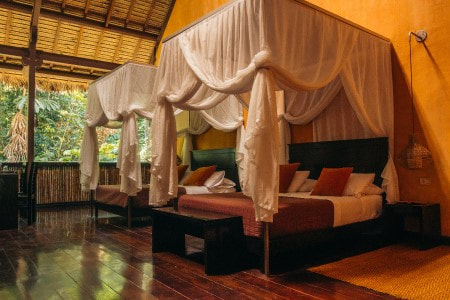
Comfort Room 2023
The lodge now offers a la carte itineraries. The activities are offered 4 times a day - early morning, morning , afternoon and evening. Check with your guide for exact start times and to plan your itinerary, selecting 1 activity per time period. All excursions have a maximum of 6 people except for the Colorado Macaw Clay Lick and Sunset cruise, which allow 10 people, and the evening lecture
ActivitiesActivity Descriptions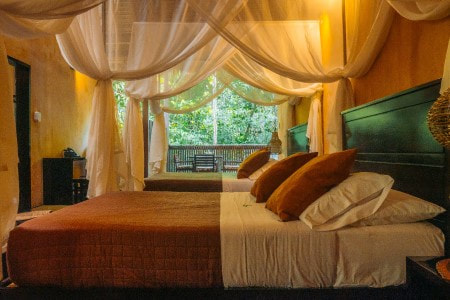
Deluxe Room 2023
Tambopata Research Center, the most remote eco-lodge in South America, now has exclusive access which reduces travel time from the city from 8 hours to only 3 hours and a half. With this new route, explorers will be able to arrive at the lodge on the same day and thus maximize their experience in the heart of the Tambopata National Reserve
In summary:
Our trip was wonderful! We saw so many types of birds and animals and it was a treat to be in the rainforest for almost a week. Both places were nice but we were really glad to be at TRC for 4 nights. They did a great job with vegan food as well. All in all, it was well worth the 2 year wait! Thanks for all your help over the last two years. My family really appreciates it. 
|
* Three times a day in common areas and Superior rooms. 24 hours in Comfort, Suites and Deluxe Suites
Deluxe suites will also have a private deck, outdoor living room and plunge pool 2023 Price per person double occupancy in US$ : (valid Dec. 20, 2023 - March 31, 2024)
2024 Price per person double occupancy in US$ : (valid April 1 - Dec. 31, 2024)
a $75 per person park fee will be added to all Tambopata Research Center programs.
Comfort, Suite and Deluxe rooms can accommodate a 3rd person. Triple rooms in Comfort room would be with 2 double beds. Children 2-12 years receive 20% discount rate when sharing with their parents in triple or quadruple, if they are in double, they are charged 100% IMPORTANT NOTE - NEW FIXED DEPARTURES TRANSFERS • Transfer In - 1pm • Transfer Out - From Tambopata Research Center - One daily: 7:30am arriving back to Puerto Maldonado at 11am (estimated time) For departures from Tambopata Research Center a flight is needed after 12:30 noon. Reservations and Cancellations Policies: We need: Final Rooming list 30 days prior to departure date Re-Confirmation 07 days prior to departure date Modification without Penalty is ok 07 days prior to departure date Cancellation without penalty is ok 07 days prior to departure date *Rooming list must contain the following information: • First & Last name • Passport number • Country of origin • Birth date • Language preference for guiding • Arrival and departure information to and from Puerto Maldonado, including flight code number to print the boarding pass when leaving from Puerto Maldonado. • Please report any dietary restrictions or physical condition that we should be aware of. Biosafety Protocols Because the safety of their guests and team is a priority for them, they present the essential protocols for theirr operation:
The Rainforest Alliance Certified™ mark is a tool to encourage progress towards the responsible use of natural resources and promote a healthy market system that values sustainable production, sourcing and consumption and equitable trade and prepare businesses for certification.
The Rainforest Alliance Certified™ mark will allow companies to advise their clients and customers that they are buy¬ing a product or service from a business that cares about its impact on the planet and local communities and has taken measurable steps to reduce that impact. The Rainforest Alliance Certified™ mark communicates a business' commitment to reducing its environmental impact and is awarded to climate, tourism and certain forestry enterprises. |
