Venezuela Tours
|
If you are looking for something that includes pristine jungle, tepuis, waterfalls and local culture, we suggest that you also consider one of our amazon tours in Colombia, where there are some areas that are part of the Guyana Shield, like the tepuis in Venezuela.
|
|
|
You must have a visa to enter Venezuela. The Venezuelan embassy and consulates in the United States are not open for visa processing. Visas are not available upon arrival. Immigration officials often require proof of accommodation while in Venezuela, adequate means of support, and an onward departure itinerary. Use only official crossing points when entering Venezuela. You must obtain an entry stamp upon entry. 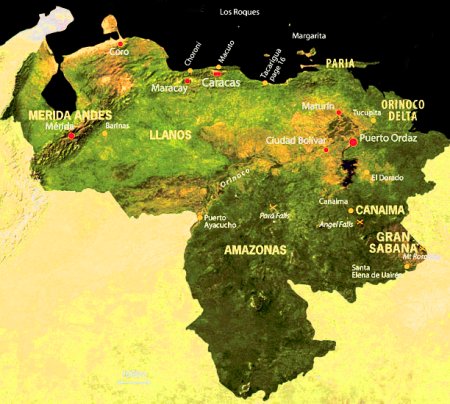
|
|
Venezuela is a vast and varied destination that remains largely undiscovered and under-visited by international tourists. From snow-capped Andean peaks to white-sand Caribbean beaches, from the Orinoco River to the skyscrapers of Caracas, there's an astounding range of places to see and things to do. Adventurous types can hike to the foot of Angel Falls, the tallest waterfall on the planet, or fish for piranha and wrangle anaconda on the flooded plains of Los Llanos.
Venezuela is exceptionally rich in biological diversity and pure natural beauty. With 43 national parks and a score of other natural monuments and protected areas, it's a fabulous destination for nature lovers, bird-watchers, and adventure travelers. There's great windsurfing, kite boarding, scuba diving, fishing, mountain biking, mountain climbing, hiking, trekking, and river rafting.
Venezuela has the richest oil reserves in the Western Hemisphere. Thanks to the oil, it is one of the most modern and industrialized countries in Latin America. Still, despite skyrocketing crude oil prices and years of rule under the charismatic and controversial President Hugo Chávez, nearly half of the population still lives below the poverty line. Widespread unemployment, underemployment, and crippling poverty spur high levels of crime and violence, especially in Caracas and other urban areas.
Venezuela, the closest South American country to the United States, has frequent and affordable air connections to both the U.S. and Europe, and is thus easily accessible to international tourists. Most of the country is connected by an excellent network of paved roads and a good internal commuter air system.
Roman Catholicism is by far the dominant religion in Venezuela, and has been adopted by most indigenous people -only those living in isolated regions still practice their ancient tribal beliefs. The Protestant church has a significant presence, and recently has been gaining some ground, attracting adherents from the Catholic Church. An unusual and obscure pantheistic sect, known as the Cult of María Lionza, exists in the northwest and combines pre-Hispanic indigenous
creeds, African voodoo and Christian religious practices. Spanish is spoken by most Venezuelans, though more than 30 indigenous tongues are spoken by remote tribes. English is spoken by some people in urban centers.
FOOD & DRINK
As a large country with many varied zones, Venezuela has its own distinctive regional cooking. On the coast you'll find various hervidos de pescado (fish soup), also crayfish, small oysters and prawns Sometimes there is turtle, though it is a protected species. Turtle may appear on menus in the Península de Paraguaná as ropa especial. A favourite is sancocho, a rich and delicious fish stew. Consomé de chipi chipi is a thin broth with tiny clams, and reputed to be an aphrodisiac. Around Coro, chivo en coco (goat in coconut) is a speciality. Andean cuisine is very different. Arepas here are made of wheat, rather than corn. Local potatoes are very sweet and the locally-made cheese is superb. Also good are the cured meats and sausages that are sold at the roadside in many rural villages. In the Amazon region the staples are yuca (yucca or manioc), plantains, corn and beans. Casabe (cassava) is a dry, fibrous flatbread. People here also eat fish, turtles, tapirs, monkeys and birds. A local delicacy are deep-fried ants, especially the winged ones known as culonas (big bottoms). But don't feel that you have to follow suit.
VENEZUELAN SPECIALTIES
It may seem strange for a country whose capital boasts some of the continent's most sophisticated culinary delights, but Venezuela's favorite food is a lump of fried corn or wheat flour about the size of a fist. Yes, the arepa is as ubiquitous in Venezuela as fish and chips in Britain or sausages in Germany. The cheap and filled arepa is eaten by everyone, everywhere, and it seems, at every hour of the day. Arepas are sliced open and stuffed with just about anything. Among the most popular fillings are: carne mechada (shredded beef), reina pepiada (chicken with avocado), ensalada de atún (tuna salad) or simply queso amarillo (yellow cheese). At breakfast they are filled with perico, scrambled eggs with tomato and onion. Arepas can also be spread with natilla, a light cream cheese, or eaten alone as an accompaniment to the national dish, pabellón criollo. This features shredded beef spiced with onions, green pepper, tomato,
coriander and garlic, rice, fried plantain and caraotas negras (black beans). This is part of the staple diet of many working-class people and also a regular on many restaurant menus.
Similar to the arepa is the tequeño. This is made of egg pastry dough, rolled into cigar-shaped pieces, wrapped around strips of cheese and fried (very tasty). These are served as pasapalos (hors d'oeuvres) or eaten anytime as a snack. Another culinary ever-present is the cachapa, a thick and slightly sweet pancake made with maize. They're eaten at breakfast or as a snack with cheese. And not forgetting the empanada, a fried cornmeal turnover filled with cheese, meat or fish (the trout ones in the Andes are to die for), or cachitos, which are filled croissants (invariably ham and/or cheese).
Venezuela also boasts fine meat, fish and mariscos (shellfish). Beef is produced by the ton in the Llanos and you can enjoy a big steak for less than the price of a beer in Europe. You can choose between muchacho (roast beef), solomo (sirloin) and lomito (steak). Serious meat eaters can put their arteries at risk with a mighty parrilla, or mixed grill.
Up in the Andes the lakes and streams are filled with trucha (trout), which you would be crazy to miss, and along the Caribbean coast you can dine on pargo (red snapper), dorado and shellfish, like clams or oysters.
Venezuela has a bewildering selection of tropical fruits. There's lechosa (papaya the size of a football), mangos, guayaba (guava), guanábana, zapote (sapodilla plum), níspero (the fruit of the medlar tree), oranges, pears, breadfruit, melons, pineapples, strawberries, coconuts, parchita (passion fruit), limones (lemons) and aguacate (avocado). Not surprisingly, then, fruit juices are big business here, and just wonderful. There's papelón con limón (lemonade sweetened with raw sugar), or jugo de caña (pale green sugar cane juice) and coco (coconut, of course), drunk straight from the shell. Anything, in fact, can be made into a mouth-watering jugo (juice), batido (more fruit and less water than jugo) or merengada (a milkshake). You'll find every kind of banana here –from the short and stubby cambur, to the large plátano (which is mostly used for frying). Very good are bags of crisply fried, lightly salted banana chips called tostones.
DRINK
Venezuelan rum is very good; recommended brands are Cacique, Selecto, Pampero and Santa Teresa. There are four good local beers: Polar (the most popular), Regional (with a strong flavor of hops), Cardenal and Zulia. Brahma beer (lighter than Polar) is imported from Brazil. There are also mineral waters and gin. Now there is a good, local wine in Venezuela. The Polar brewery has joined with Martell (France) and built a winery in Carora. Wines produced are 'Viña Altagracia' and 'Bodegas Pomar'. 'Bodegas Pomar' also produces a sparkling wine in the traditional champagne style. Liqueurs are cheap, try the local ponche crema. The coffee is excellent and very cheap. Chicha de arroz is a sweet drink made of milk, rice starch, sugar and vanilla.
Venezuela Restaurants
Although both Caracas and Isla de Margarita have a wide range of restaurants serving a whole gamut of international cuisines, your choices will be much more limited throughout most the rest of the country. Venezuelan cuisine is neither very distinctive nor noteworthy. Most meals consist of a meat or chicken dish (either fried, grilled, or in a stew), accompanied by some stewed vegetables, rice, and the ubiquitous arepa, the traditional cornmeal patty that's a kind of cross between a tortilla and a biscuit. Vegetarians may have a particularly hard time. If you are vegetarian, try to coordinate your meals in advance with hotels and tour agencies.
For those with a sweet tooth, be sure to try a piece of the national cake, bienmesabe, a soft sponge cake soaked in a sweet coconut-cream sauce. (Its name literally means "Tastes good to me!") Also be sure to sample some of the fresh fruit drinks, or batidos. These are made with whatever ripe tropical fruits are on hand. My favorite batido is made of mango, but parchita, or passion fruit, runs a close second.
Venezuela is exceptionally rich in biological diversity and pure natural beauty. With 43 national parks and a score of other natural monuments and protected areas, it's a fabulous destination for nature lovers, bird-watchers, and adventure travelers. There's great windsurfing, kite boarding, scuba diving, fishing, mountain biking, mountain climbing, hiking, trekking, and river rafting.
Venezuela has the richest oil reserves in the Western Hemisphere. Thanks to the oil, it is one of the most modern and industrialized countries in Latin America. Still, despite skyrocketing crude oil prices and years of rule under the charismatic and controversial President Hugo Chávez, nearly half of the population still lives below the poverty line. Widespread unemployment, underemployment, and crippling poverty spur high levels of crime and violence, especially in Caracas and other urban areas.
Venezuela, the closest South American country to the United States, has frequent and affordable air connections to both the U.S. and Europe, and is thus easily accessible to international tourists. Most of the country is connected by an excellent network of paved roads and a good internal commuter air system.
Roman Catholicism is by far the dominant religion in Venezuela, and has been adopted by most indigenous people -only those living in isolated regions still practice their ancient tribal beliefs. The Protestant church has a significant presence, and recently has been gaining some ground, attracting adherents from the Catholic Church. An unusual and obscure pantheistic sect, known as the Cult of María Lionza, exists in the northwest and combines pre-Hispanic indigenous
creeds, African voodoo and Christian religious practices. Spanish is spoken by most Venezuelans, though more than 30 indigenous tongues are spoken by remote tribes. English is spoken by some people in urban centers.
FOOD & DRINK
As a large country with many varied zones, Venezuela has its own distinctive regional cooking. On the coast you'll find various hervidos de pescado (fish soup), also crayfish, small oysters and prawns Sometimes there is turtle, though it is a protected species. Turtle may appear on menus in the Península de Paraguaná as ropa especial. A favourite is sancocho, a rich and delicious fish stew. Consomé de chipi chipi is a thin broth with tiny clams, and reputed to be an aphrodisiac. Around Coro, chivo en coco (goat in coconut) is a speciality. Andean cuisine is very different. Arepas here are made of wheat, rather than corn. Local potatoes are very sweet and the locally-made cheese is superb. Also good are the cured meats and sausages that are sold at the roadside in many rural villages. In the Amazon region the staples are yuca (yucca or manioc), plantains, corn and beans. Casabe (cassava) is a dry, fibrous flatbread. People here also eat fish, turtles, tapirs, monkeys and birds. A local delicacy are deep-fried ants, especially the winged ones known as culonas (big bottoms). But don't feel that you have to follow suit.
VENEZUELAN SPECIALTIES
It may seem strange for a country whose capital boasts some of the continent's most sophisticated culinary delights, but Venezuela's favorite food is a lump of fried corn or wheat flour about the size of a fist. Yes, the arepa is as ubiquitous in Venezuela as fish and chips in Britain or sausages in Germany. The cheap and filled arepa is eaten by everyone, everywhere, and it seems, at every hour of the day. Arepas are sliced open and stuffed with just about anything. Among the most popular fillings are: carne mechada (shredded beef), reina pepiada (chicken with avocado), ensalada de atún (tuna salad) or simply queso amarillo (yellow cheese). At breakfast they are filled with perico, scrambled eggs with tomato and onion. Arepas can also be spread with natilla, a light cream cheese, or eaten alone as an accompaniment to the national dish, pabellón criollo. This features shredded beef spiced with onions, green pepper, tomato,
coriander and garlic, rice, fried plantain and caraotas negras (black beans). This is part of the staple diet of many working-class people and also a regular on many restaurant menus.
Similar to the arepa is the tequeño. This is made of egg pastry dough, rolled into cigar-shaped pieces, wrapped around strips of cheese and fried (very tasty). These are served as pasapalos (hors d'oeuvres) or eaten anytime as a snack. Another culinary ever-present is the cachapa, a thick and slightly sweet pancake made with maize. They're eaten at breakfast or as a snack with cheese. And not forgetting the empanada, a fried cornmeal turnover filled with cheese, meat or fish (the trout ones in the Andes are to die for), or cachitos, which are filled croissants (invariably ham and/or cheese).
Venezuela also boasts fine meat, fish and mariscos (shellfish). Beef is produced by the ton in the Llanos and you can enjoy a big steak for less than the price of a beer in Europe. You can choose between muchacho (roast beef), solomo (sirloin) and lomito (steak). Serious meat eaters can put their arteries at risk with a mighty parrilla, or mixed grill.
Up in the Andes the lakes and streams are filled with trucha (trout), which you would be crazy to miss, and along the Caribbean coast you can dine on pargo (red snapper), dorado and shellfish, like clams or oysters.
Venezuela has a bewildering selection of tropical fruits. There's lechosa (papaya the size of a football), mangos, guayaba (guava), guanábana, zapote (sapodilla plum), níspero (the fruit of the medlar tree), oranges, pears, breadfruit, melons, pineapples, strawberries, coconuts, parchita (passion fruit), limones (lemons) and aguacate (avocado). Not surprisingly, then, fruit juices are big business here, and just wonderful. There's papelón con limón (lemonade sweetened with raw sugar), or jugo de caña (pale green sugar cane juice) and coco (coconut, of course), drunk straight from the shell. Anything, in fact, can be made into a mouth-watering jugo (juice), batido (more fruit and less water than jugo) or merengada (a milkshake). You'll find every kind of banana here –from the short and stubby cambur, to the large plátano (which is mostly used for frying). Very good are bags of crisply fried, lightly salted banana chips called tostones.
DRINK
Venezuelan rum is very good; recommended brands are Cacique, Selecto, Pampero and Santa Teresa. There are four good local beers: Polar (the most popular), Regional (with a strong flavor of hops), Cardenal and Zulia. Brahma beer (lighter than Polar) is imported from Brazil. There are also mineral waters and gin. Now there is a good, local wine in Venezuela. The Polar brewery has joined with Martell (France) and built a winery in Carora. Wines produced are 'Viña Altagracia' and 'Bodegas Pomar'. 'Bodegas Pomar' also produces a sparkling wine in the traditional champagne style. Liqueurs are cheap, try the local ponche crema. The coffee is excellent and very cheap. Chicha de arroz is a sweet drink made of milk, rice starch, sugar and vanilla.
Venezuela Restaurants
Although both Caracas and Isla de Margarita have a wide range of restaurants serving a whole gamut of international cuisines, your choices will be much more limited throughout most the rest of the country. Venezuelan cuisine is neither very distinctive nor noteworthy. Most meals consist of a meat or chicken dish (either fried, grilled, or in a stew), accompanied by some stewed vegetables, rice, and the ubiquitous arepa, the traditional cornmeal patty that's a kind of cross between a tortilla and a biscuit. Vegetarians may have a particularly hard time. If you are vegetarian, try to coordinate your meals in advance with hotels and tour agencies.
For those with a sweet tooth, be sure to try a piece of the national cake, bienmesabe, a soft sponge cake soaked in a sweet coconut-cream sauce. (Its name literally means "Tastes good to me!") Also be sure to sample some of the fresh fruit drinks, or batidos. These are made with whatever ripe tropical fruits are on hand. My favorite batido is made of mango, but parchita, or passion fruit, runs a close second.
